What Questions Can I Ask My Oncologist - And Which Ones Should I Ask Myself?
A guide for cancer patients who want to take an active role in their treatment
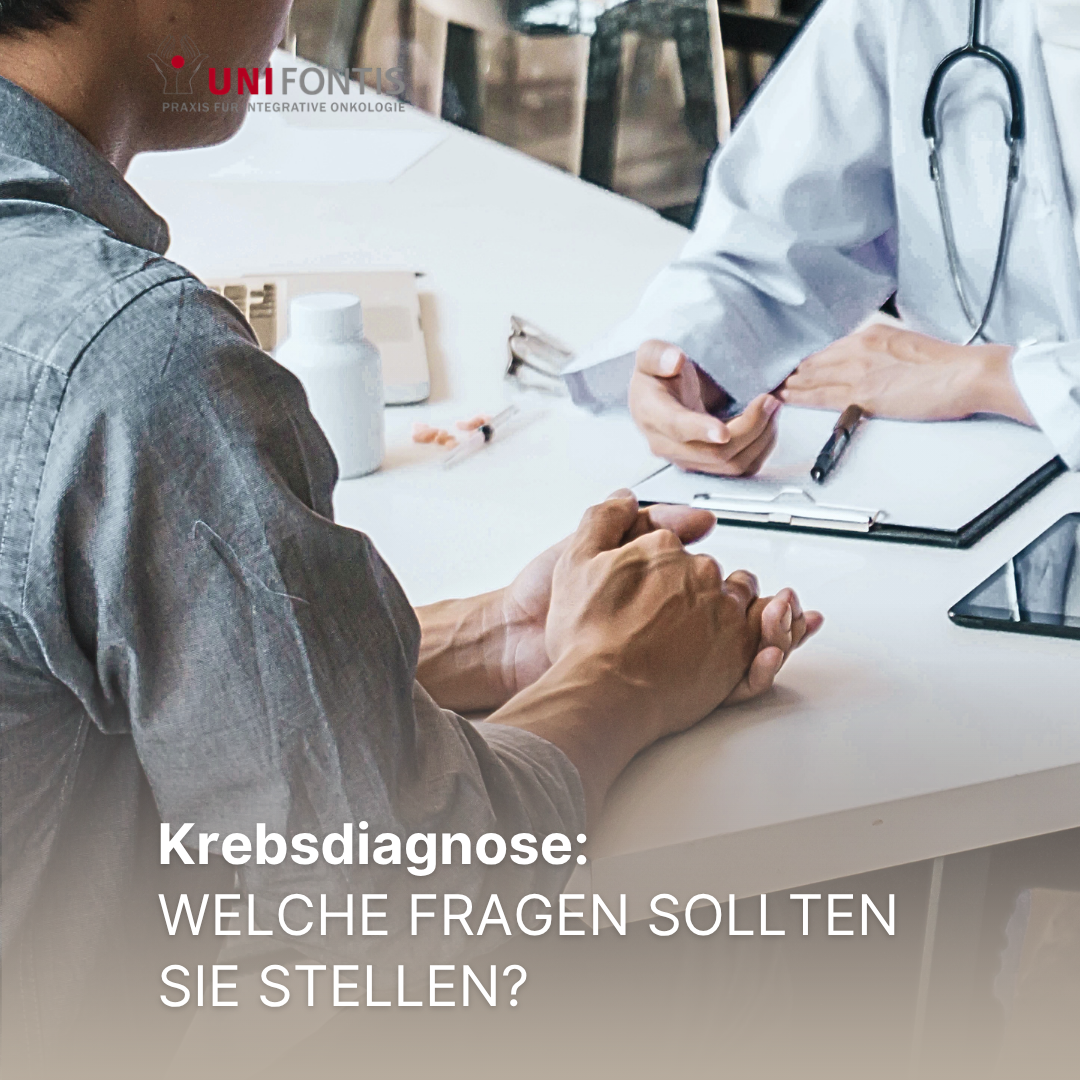
A cancer diagnosis raises countless questions in a very short time. Many patients report leaving their appointment only to realize on the way home: there was so much more I wanted to ask. The feeling of being overwhelmed, or of asking the "wrong" questions, is something many people know all too well. But there are no wrong questions. Anyone who receives a cancer diagnosis has the right to know everything that concerns them.
At UNIFONTIS in Sickte, we see every day how important it is for patients to actively participate in the dialogue with their care team. Because good cancer treatment is always a collaboration, between doctor and patient, between medicine and the person as a whole.
This article gives you a structured overview: What questions can and should you ask your oncologist? And which questions are worth reflecting on with yourself first?
Why Questions Matter So Much
In oncology, knowledge is an important part of healing. When you understand why a particular therapy was chosen, how it works, and what it can achieve, you are better able to move through treatment with a greater sense of calm and confidence. Studies show that patients who are actively involved in conversations often report a higher quality of life during treatment.
At the same time, we find that many people hesitate to ask questions, out of fear of taking up too much of the doctor's time, of being seen as a "difficult patient," or of hearing an answer they dread. We want to reassure you: every question you have is valid. You are at the center of your treatment, and your questions help us understand you better and support you as an individual.
Questions About Your Diagnosis: What Exactly Has Been Found?
The first set of important questions concerns the diagnosis itself. Before treatment begins, you should understand as clearly as possible what you are dealing with.
Questions you can ask your oncologist:
- What type of cancer has been diagnosed, and what stage is the disease at?
- How was the diagnosis confirmed, and what test results is it based on?
- Are there specific characteristics of my tumor that are relevant to the treatment decision, for example certain genetic markers or my immune profile?
- Have any lymph nodes or other organs been affected?
- What does this finding mean for my body and my health in the near future?
In integrative oncology, we place particular importance on analyzing not only the tumor but also the patient's immune system. A comprehensive picture of the disease is the foundation for a truly personalized treatment approach.
Questions About Treatment: What Are My Options?
This is often the most important area for patients, and also the most complex. Modern oncology offers more options than many people realize, and it is well worth asking specific questions.
Questions you can ask your oncologist:
- What treatment options are available for my specific situation?
- Why do you recommend this particular treatment, and what alternatives would be possible?
- What is the goal of the proposed therapy: cure, tumor reduction, symptom relief, or stabilization?
- Are there complementary therapies that could support the effectiveness of the standard treatment?
- Could an integrative approach, such as immunotherapy, hyperthermia, or biological infusions, be beneficial in my case?
- What happens if I choose not to undergo the recommended treatment?
The last question in particular can sometimes reveal important information about the actual benefit and urgency of a treatment decision. A good oncologist will give you an honest answer.
Questions About Side Effects and Tolerability
Many patients have significant concerns about side effects, often for good reason, but sometimes based on incomplete information or outdated experiences. It is worth asking specific questions.
Questions you can ask your oncologist:
- What side effects can be expected with this treatment?
- Which side effects are common, which are rare, and which could be serious?
- What can I do on my own to ease or prevent side effects, for example through diet, exercise, or supplementary micronutrients?
- Are there supportive measures that can improve how well I tolerate the treatment?
- How long can side effects last after treatment has ended?
In our practice, we find that complementary biological approaches can help reduce the burden of conventional therapies.
However, this does not mean the same approach works equally well for every patient. Each person responds differently, and what helps one patient may not have the same effect for another.
Questions About Follow-Up Care and Relapse Prevention
The period after active treatment is often underestimated, yet follow-up care is crucial for long-term health.
Questions you can ask your oncologist:
- What does follow-up care look like after my treatment, and how often should check-ups take place?
- What warning signs should I be aware of that could indicate a recurrence?
- Are there measures for relapse prevention that might be appropriate for me?
- Could ongoing immunological monitoring help reduce the risk of recurrence?
- What changes to my lifestyle, diet, or exercise routine could provide long-term support?
In the area of relapse prevention, there are now promising approaches that go beyond standard follow-up examinations. Mitochondrial therapies, autologous vaccines, and targeted micronutrient therapies can be a meaningful addition, always depending on each patient's individual situation.
Questions to Ask Yourself
Not all important questions are directed at your doctor. Some need to be clarified within yourself first, because you are the one who plays an active role in decisions about your treatment.
Questions about your own values and priorities:
- What matters most to me in my treatment: the strongest possible tumor control, the best possible quality of life, or a balance between the two?
- How much treatment intensity am I willing and able to manage?
- Am I open to trying complementary therapies, or do I prefer to focus on conventional medicine?
- What does quality of life mean to me personally, and what limitations am I willing to accept in the short term?
Questions about your daily life and support network:
- Who is by my side, and who can I ask for support?
- How do I tell my family or those close to me about the diagnosis and the treatment?
- How do I handle work and sick leave?
- What impact will the treatment have on my daily routine, and how can I prepare for that?
Questions about your emotional wellbeing:
- Do I have access to psychological support if I need it?
- How do I cope with fear, uncertainty, and an overwhelming amount of information?
- Are there self-help groups or opportunities to connect with others in a similar situation that might help me?
These questions do not have straightforward answers and do not need to be resolved immediately. But they help you gain clarity about your own situation and personal priorities, which in turn forms the basis for productive conversations with your care team.
How to Prepare for an Appointment With Your Oncologist
A little preparation can make your conversations with your oncologist even more helpful.
Practical tips:
- Write down your questions before the appointment. That way, you won't forget anything, even if you feel nervous during the conversation.
- Bring someone you trust. A second person often picks up on things you may not be able to take in at the time, and can help you piece together the conversation afterward.
- Ask to have important information written down or explained in plain language. This is not a sign of weakness; it is a sign of taking responsibility for your own care.
- Speak up if you don't understand something. Medical terminology can be difficult for non-specialists. A good doctor is always happy to explain again.
- Ask about reliable sources of information, such as brochures, links, or additional materials you can trust.
At UNIFONTIS, we take the time needed for every initial consultation to get to know your situation, your wishes, and your previous experiences. The conversation between doctor and patient is not a formality for us; it is the heart of good treatment.
Getting a Second Opinion: Is That Allowed?
Yes, and in many cases it is actually recommended. Seeking a second opinion does not mean you distrust your doctor. It means you want to make your decision on as broad an information base as possible. That is your right.
Particularly in the case of rare tumor types, unclear findings, or when you feel that certain aspects have not been sufficiently considered, an additional perspective can be very valuable. Integrative oncologists can offer a complementary viewpoint that goes beyond standard protocols and takes individual factors more fully into account.
Our Approach at UNIFONTIS: Questions Are Always Welcome
Prof. Dr. med. Joachim Drevs, specialist in internal medicine and oncology and founder of UNIFONTIS, sums up our philosophy this way: "Cancer treatment must be as individual as the person receiving it." That requires us to truly know the person, and that is only possible through genuine dialogue.
We see the relationship between doctor and patient as a partnership. Patients who ask questions help us develop the best possible treatment that is right for them as individuals. At our practice in Sickte, as well as through video consultations and telephone appointments, we are available for exactly this kind of conversation.
If you have received a cancer diagnosis and would like to learn what integrative oncology can offer for your situation, please feel free to reach out to us. We are here to listen.