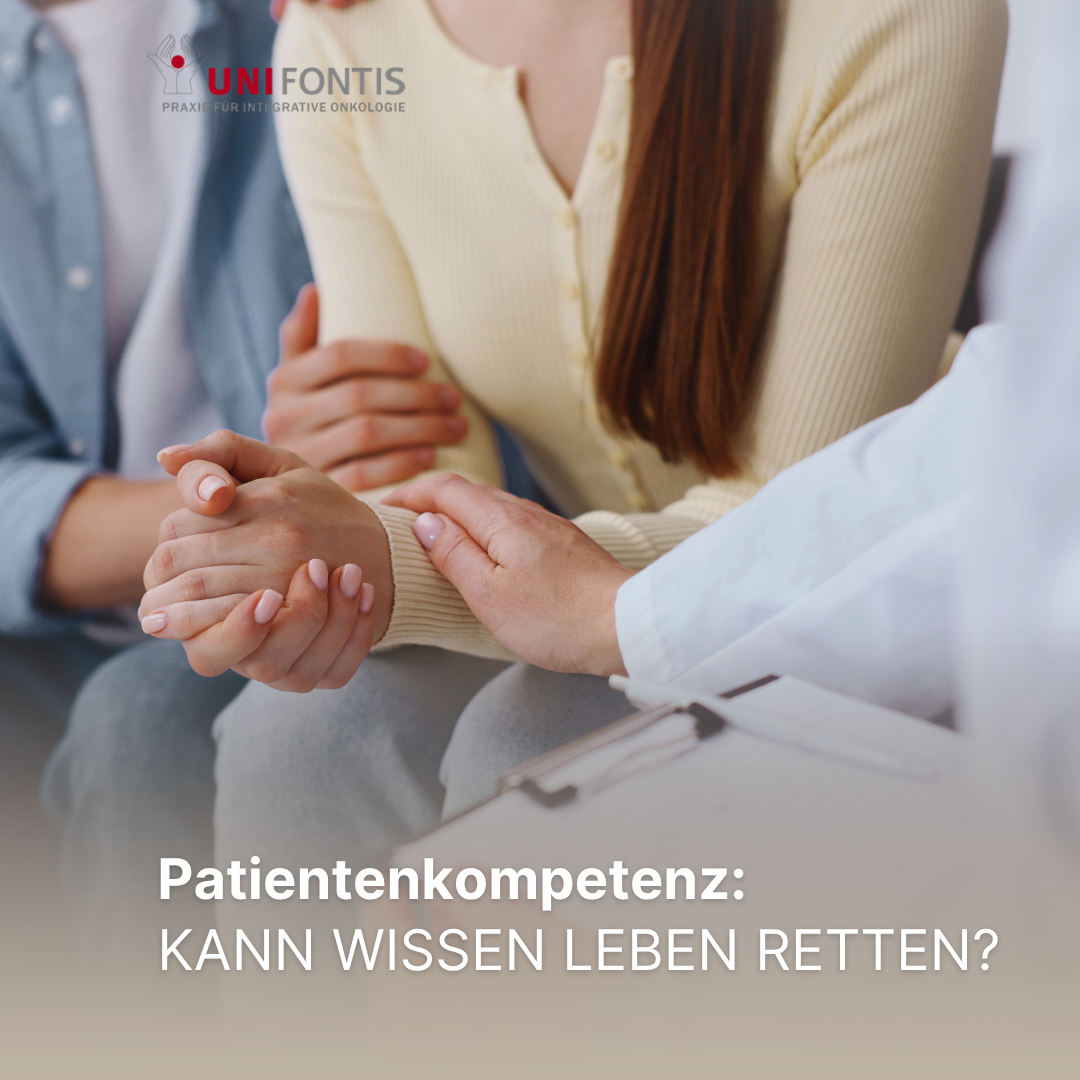
Patient Competence:Can Knowledge Really Save Lives?
This question lies at the heart of a conversation with Professor Dr. Joachim Drevs, specialist in internal medicine, hematology and oncology at UNIFONTIS in Sickte. In an interview with QS24, Professor Drevs talks about why it can be important for people with cancer to better understand their own diagnosis and treatment. The goal is not to replace medical expertise, but to involve patients as informed partners in their care.
Our practice, UNIFONTIS in Sickte, and Professor Drevs' new social media channel focus on exactly this: making medical knowledge understandable, so that patients can ask more targeted questions and make decisions together with their care team.
What does patient competence mean?
Patient competence describes the ability to engage with one's own illness and to better understand medical information. This includes, for example, understanding the diagnosis and stage of disease, reviewing medical letters and test results, and asking questions about treatment.
Professor Drevs emphasizes that patient competence can take many forms. Some people want to inform themselves thoroughly and take an active role in decision-making. Others feel more secure leaving most decisions to their medical team. There is no single "right" way to deal with a diagnosis. What matters most is that patients receive the support and clear information they need for their own personal path.
In the interview, Professor Drevs refers to a scientific study showing that patients who better understand their illness and actively engage with their therapy may have a better prognosis for certain types of cancer. This is a statistical observation, not a guarantee for how any individual case will progress.
Understanding helps you ask questions and take part in decisions
After a diagnosis, patients are often confronted with many new terms, test results and treatment options. It can be difficult to process all this information in a short time. This makes it all the more important to ask questions and have the meaning of the diagnosis explained for your individual situation.
Professor Drevs recommends actively requesting medical letters and reports and keeping them well organized. This allows patients to better follow the course of their own illness and have important information on hand for future consultations. In certain situations, a second opinion can also help in weighing decisions more carefully.
One important point: individual lab values or terms should not be interpreted without their medical context. A test result can usually only be properly understood together with the patient's medical history, further test results, and the assessment of the care team.
How patients can strengthen their competence
Here is how you can take an active role and support your own treatment:
- Request and collect documents - including medical letters, test results, and information about previous treatments.
- Prepare your questions - writing down your most important questions before an appointment helps you make the most of limited consultation time.
- Ask when something is unclear - it's perfectly fine to ask for an explanation in plain language or to ask something to be repeated.
- Bring someone with you - four ears often hear more than two. A trusted companion can also help you discuss the information afterward.
- Put information into context together - online research can offer initial pointers, but it does not replace individual medical advice.
- Raise your concerns respectfully - an open question such as "Could you explain how this option would apply in my specific case?" can make the conversation easier.
The goal is not to create conflict with the care team. It's about collaboration - one in which the medical expertise of the care providers and the personal experiences and wishes of the patient both have a place.
Hope and clear communication
Another key theme of the interview is the importance of hope. Professor Drevs advocates discussing realistic perspectives alongside risks and possible side effects. Hope does not mean concealing difficulties or promising a cure. Rather, it can help patients approach the next steps with confidence and a sense of direction.
Good medical communication combines honesty with clarity and respect. Patients should have the opportunity to process information and ask their questions. Family members can also be included in conversations, if the patient wishes.
The role of family members
Family members can provide important support. They can listen during medical consultations, add questions, and help sort through information afterward. In the interview, Professor Drevs highlights that having a companion present can strengthen patient competence.
At the same time, it remains essential that the wishes and decisions of the patient stay at the center. Family members accompany and support, but they do not make decisions on the patient's behalf, as long as the patient is able and willing to decide for themselves.
Patient competence does not replace medical advice
Informing yourself and raising your own questions is valuable. However, this does not mean patients should diagnose themselves or change their therapy on their own. Medical decisions depend on many individual factors and should always be made together with qualified healthcare professionals.
The approach at UNIFONTIS is to make complex topics more understandable - topics that patients often seek guidance on. This can help patients prepare for medical consultations and express their own concerns more clearly.
Making medical knowledge understandable: Professor Drevs on social media
Through his social media channel, Professor Drevs aims to share medical knowledge in accessible language. The content is intended to help patients better understand basic concepts and prepare for conversations with their care team.
This offering is meant as a complement, not a substitute, for an individual examination or consultation. Anyone with questions about a specific diagnosis or therapy should always discuss these with their treating physicians.
Conclusion: Being informed and deciding together
Patient competence begins with understanding your own illness and knowing which questions to ask. It can mean requesting documents, bringing a companion to appointments, or wanting to better understand a doctor's assessment.
As Professor Drevs makes clear in the interview, patients don't need to become medical experts on their own. But they can actively help ensure that their wishes, questions and experiences are part of their treatment. Good patient information and a trusting partnership with the care team can provide valuable support along the way.
You can watch the full conversation with Professor Dr. Joachim Drevs here:
Can Knowledge Really Save Lives? – Interview with Professor Dr. Joachim Drevs on QS24