
How Does Cancer Actually Start?Prof. Dr. Joachim Drevs Explains the Causes and Origins
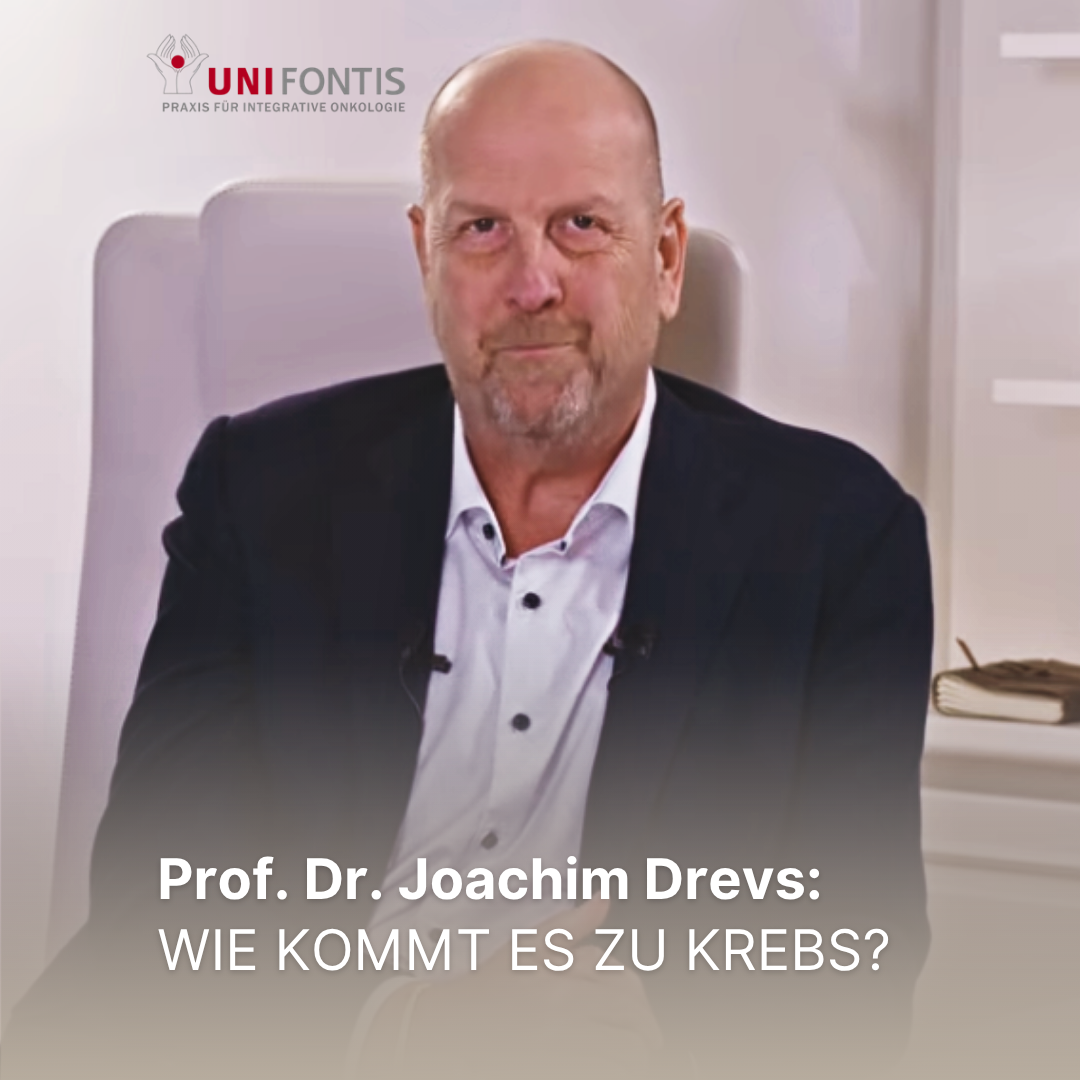
Almost everyone who receives a cancer diagnosis eventually asks the same question: Why me? As an oncologist, I, Prof. Dr. med. Joachim Drevs, hear this question again and again in my daily work. I understand it very well. That is why I want to explain, in simple terms, what science currently tells us about how cancer develops. It is important to me to give you an honest picture. At the same time, I want to be compassionate, because knowledge can help you cope better with your own situation.
Cancer Rarely Has a Single Cause
Many of us know about the link between smoking and cancer. Even so, some people point out that certain smokers never develop cancer, while some non-smokers do develop lung cancer. This is a fair point. A single risk factor and a cancer diagnosis are rarely connected in a simple way. Instead, certain influences increase the likelihood that the disease will develop. Smoking is a good example. It is linked not only to lung cancer, but also to breast cancer and bladder cancer. This surprises many people.
The Starting Point: Damaged Cells in Our Body
Based on my experience as an oncologist, the true foundation of cancer is damage to the cells in our body. Smoking causes far more cell damage than would otherwise occur. However, even people who have never smoked have some cell damage in their lungs. Air pollution and other toxins in the air affect all of us. The key difference lies in the amount of cell damage. The more cells that are damaged, the higher the risk that one of them will change and become malignant.
How Our Body Repairs Damaged Cells
To understand how cancer develops, it helps to look at the body's own repair system. Every damaged cell needs to be repaired. Think of a car brought into a workshop. There, a mechanic decides whether the car can be fixed and put back on the road, or whether it must be scrapped. Our cells work in a similar way. Repair enzymes constantly check whether a damaged cell can be restored or must be removed. This happens countless times a day in our bodies. It happens even more often in organs under greater strain, such as the lungs of smokers.
Here is a comparison from everyday life that I like to use. The more often something needs to be repaired, the greater the chance that a mistake happens along the way. Sometimes a cell is not fully repaired but stays in the body anyway. This cell then poses a certain risk to the organ and to the whole body.
Precursors to a Possible Cancer
These incompletely repaired cells are not yet cancer cells. They are altered cells that remain in the body as precursors. How many of these precursor cells build up depends heavily on outside factors. One example I often use is the higher rate of esophageal and stomach cancer in certain regions of Asia. There, very spicy food and very hot drinks are part of the traditional diet. This causes more cell damage in the esophagus and stomach, similar to how smoking damages the lungs. The more damaged cells there are, the more likely it is that some will not be repaired correctly. These cells then remain as precursor cells.
Why a Precursor Cell Actually Turns Into Cancer
I want to be honest with you here. Science still does not fully understand why a single precursor cell eventually begins to grow out of control. Based on my many years of experience as an oncologist, this usually happens when several factors come together. Many patients, looking back, describe psychological strain, such as stress from family or work. At the same time, I also know people who live calm and content lives and still develop cancer. For this reason, I believe cancer usually results from a chain of unfavorable circumstances, not from one single trigger. This also means that no one should blame themselves for their illness.
The Decisive Step: The So-Called Angiogenic Switch
The shift from a harmless precursor cell to an actual cancer cell depends on one key event. Doctors call this the "angiogenic switch." At this point, the altered cell starts to release growth factors. These act like chemical signals. They attract blood vessels, which grow toward the cell and supply it with oxygen and nutrients. Only with this new blood supply can a single altered cell grow into a malignant tumor.You can learn more about this in my YouTube video on the causes and development of cancer.
What This Knowledge Means for You and Your Treatment
This is how cancer develops: first cell damage, then repair, and finally the angiogenic switch. In my view, this understanding is the foundation of every good cancer therapy. Cancer results from many individual factors working together. That is why, at my practice, UNIFONTIS, I use treatment concepts that are just as individual. I combine established medical methods with complementary biological approaches. Targeted immunotherapy or supportive infusion therapy can strengthen your immune system and support your treatment. As with any therapy, the effect can vary from person to person. There is no guarantee, since every body and every illness is unique. In my experience, however, a treatment plan tailored to you can make treatment more
effective and easier to tolerate.
Conclusion
A cancer diagnosis is never a personal failure. It is the result of a complex biological process. This process unfolds over many years and is shaped by many factors. This knowledge is not meant to cause fear. It is meant to give you guidance and help you understand your own situation better. If you have questions about your diagnosis or about integrative treatment options, my team and I at UNIFONTIS in Sickte are happy to advise you in person.