
Gentle Chemotherapy: When Precision Matters More Than Maximum Dosage
Why Classic Chemotherapy Is So Feared
Few diagnoses change life as suddenly as cancer, and few treatments are as closely linked to fear as chemotherapy. Hair loss, nausea, weeks of exhaustion, many of these images have settled into our collective awareness over decades and still shape how patients and their families think about chemotherapy today. One reason for this is the classic dosing approach: most treatments use what is known as the maximum tolerated dose, meaning the highest amount the body can still withstand. This principle dates back to the 1960s, when laboratory research showed that higher doses destroy more cells. From this came the treatment pattern still common today: high doses given with breaks, usually of three weeks, to allow the body time to recover.
It is precisely this high dose, however, that causes the side effects so many patients fear. Even a slightly higher amount can become dangerous, because as the saying in medicine goes: the dose makes the poison.
What Is Gentle Chemotherapy
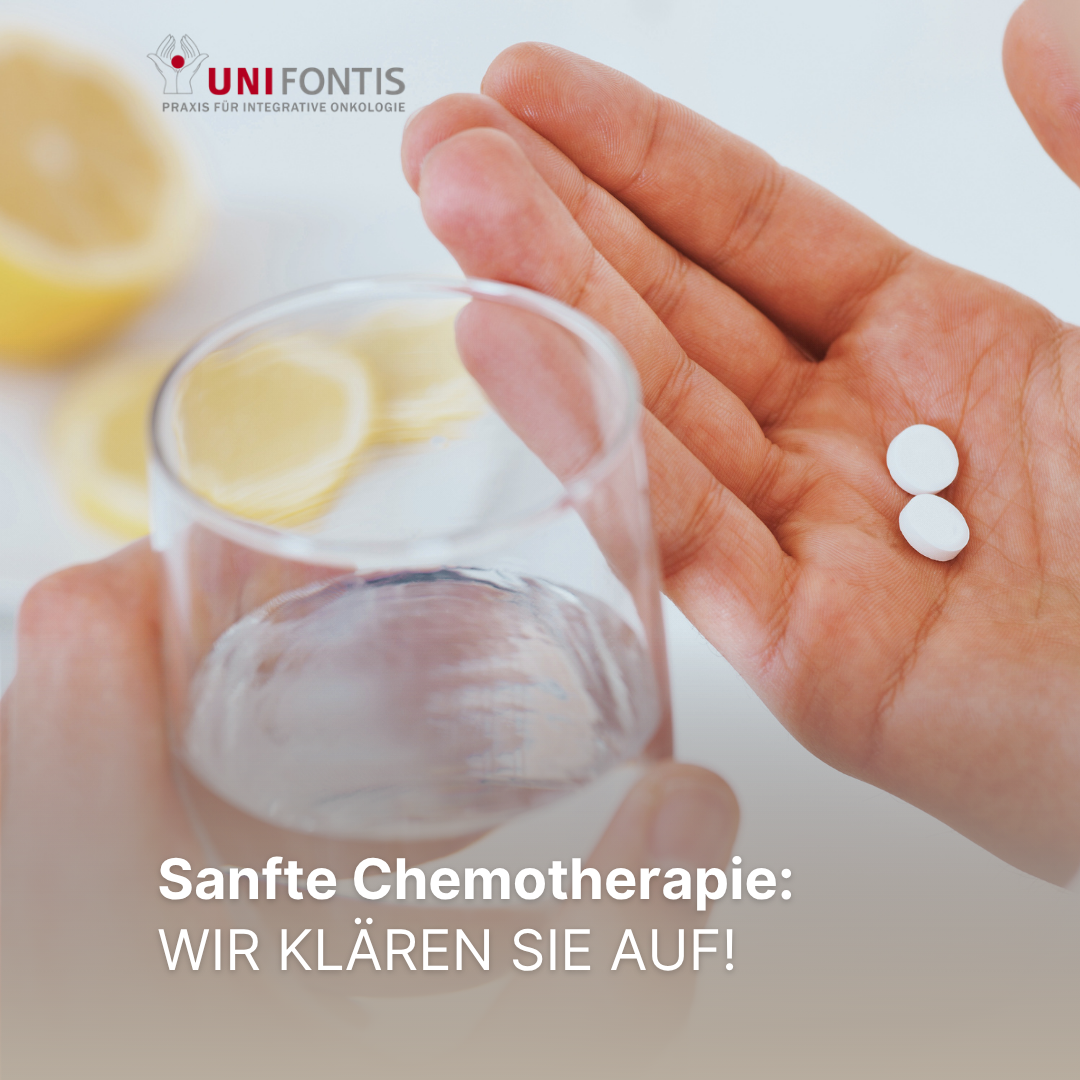
Even in the 1960s, there were signs of another approach: lower doses given every day instead of one high dose every few weeks. Today this principle is known as metronomic or gentle chemotherapy, named after the metronome, the steady rhythm keeper used with a piano. Instead of one high dose every three weeks, patients typically take tablets in low doses, continuously, often daily.
In the United States, this approach is sometimes called Smart Chemotherapy. Several studies suggest that this low dose, continuous approach can also be effective against cancer while being better tolerated than the classic high dose method. Direct comparison studies between the two approaches are still lacking, so we share this observation with appropriate caution.
How Gentle Chemotherapy Can Work
The difference lies in where the treatment takes effect. High dose chemotherapy aims mainly to destroy tumor cells directly. Low dose, continuous therapy works differently: it can specifically inhibit what a tumor needs in order to grow, such as new blood vessels that supply it or enzymes that help it spread into surrounding tissue. For this effect to work reliably, the medication needs to be taken regularly, that is, every day. How strong this effect is always depends on the specific condition and your personal situation.
Conventional oncology is already moving in a similar direction: for some types of cancer, chemotherapy is now occasionally given weekly and at a somewhat lower dose, an approach that comes close to the metronomic principle.
Who May Be a Good Candidate for Gentle Chemotherapy
Whether gentle chemotherapy could be a meaningful option for you depends on your condition, how it has progressed, and your personal situation. We consider it especially when tolerability, quality of life, and long term control of the disease are the main priorities. It may help keep the tumor under control while easing the burden on your everyday life, although there is no guarantee of a specific outcome. As with every cancer therapy, this approach works somewhat differently for each person.
The Integrative Approach at UNIFONTIS
At UNIFONTIS, under the direction of Prof. Dr. med. Joachim Drevs, gentle chemotherapy is one possible building block among several. We use it where it fits your personal treatment concept, often combined with hyperthermia, individualized immunotherapy, or innovative infusion therapies. Our aim is to make your treatment more effective and better tolerated, always with your body, your immune system, and your life situation in mind.
The process begins with a thorough initial consultation, including a detailed medical history and an immune profile based on modern laboratory analysis. Building on this, we work together with you to develop a treatment concept tailored to you. Whether gentle chemotherapy could make sense for you is something we always discuss personally, based on your individual findings.
Your Next Step
Would you like to find out whether gentle chemotherapy or another integrative approach could be right for you? Feel free to get in touch with us, by phone, by video call, or in person at our practice in Sickte. We will review your findings together and discuss your options with you.
