From Nature to the IV Drip: Resveratrol and its Potential in Modern Oncology
Some of the most powerful substances in modern medicine do not originate in a laboratory, they come from nature. Resveratrol is one of them: a plant-derived compound that is gaining increasing recognition in integrative oncology and is a targeted part of our treatment approach at UNIFONTIS.
What is resveratrol?
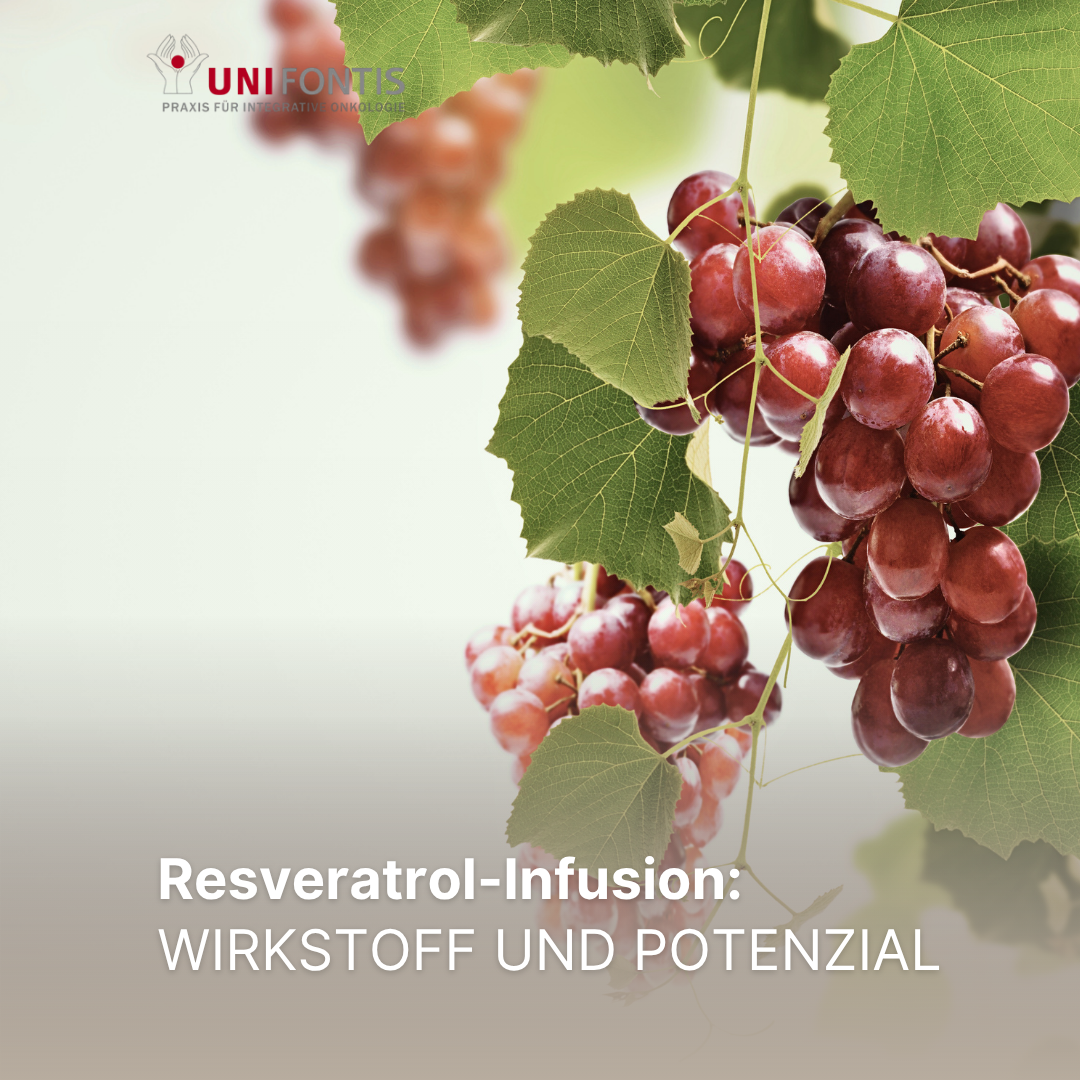
Resveratrol is a secondary plant compound belonging to the group of polyphenols. It is found primarily in the skin of red grapes and in Japanese knotweed (Polygonum cuspidatum), where it serves as a natural defence mechanism against UV radiation, fungal attack and other environmental stressors. For the human body, resveratrol offers a range of notable biological properties: antioxidant, anti-inflammatory and, increasingly, antitumoral.
The compound first gained wider attention in connection with the so-called "French Paradox": despite dietary habits similar to those in other Western countries, people in France showed statistically fewer cardiovascular diseases. Researchers attributed this partly to moderate, regular red wine consumption and, in the course of further investigation, identified resveratrol as one of the key active compounds.
Why Resveratrol as an Infusion?
When taken orally, resveratrol is absorbed reasonably well, but it is broken down rapidly by the liver, leaving comparatively low concentrations in the body's tissues. In oncology, where precise and sufficiently high levels of an active compound matter greatly, this is a critical limitation.
That is why at UNIFONTIS we administer resveratrol intravenously. An infusion can achieve significantly higher tissue concentrations than oral supplementation alone. The infusions are generally well tolerated and can, depending on the individual treatment plan, be used alongside other oncological measures.
What Mechanisms of Action Are Known?
Science is actively researching resveratrol and its effects on tumour cells. Studies and research to date point to several mechanisms that may be relevant in integrative oncology:
Inhibition of tumour growth: Resveratrol may slow the growth of tumour cells and inhibit their proliferation. At the same time, it can promote apoptosis, the programmed death of abnormal cells.
Anti-angiogenic effect: A tumour depends on the formation of new blood vessels to supply itself with nutrients. Resveratrol can inhibit this process, known as angiogenesis, and may thereby impair the tumour's supply lines.
Anti-inflammatory action: Chronic inflammation is considered one of the key drivers of cancer development. The strongly anti-inflammatory properties of resveratrol can have a regulatory effect in this context.
Protection of healthy cells: Through its antioxidant properties, resveratrol can help protect healthy cells from oxidative stress, which is particularly relevant as a supportive therapy alongside conventional cancer treatment.
Chemosensitivity: Particularly noteworthy: even tumours that have already developed resistance to standard chemotherapy agents may become more responsive to these substances through resveratrol, potentially improving the overall effectiveness of chemotherapy.
Resveratrol as Part of an Integrative Concept
At our practice for integrative oncology, we do not view resveratrol as a standalone measure but as one building block within a carefully coordinated overall treatment concept. Every treatment at UNIFONTIS is planned individually, based on a comprehensive immune profile and each patient's personal medical situation.
Whether resveratrol infusions are appropriate for you, and in what form, depends on your specific diagnosis, your current stage of treatment and your general state of health. During the active treatment phase, resveratrol may be used alongside chemo- or immunotherapy. In the follow-up phase, it can help stabilise the immune system and support the body's long-term resilience.
What Research Shows, and What Remains Open
Resveratrol is not a cure-all and is not a substitute for conventional oncological therapies. Much of the existing evidence comes from laboratory studies and animal trials; clinical studies in humans are still evolving. We therefore use resveratrol where scientific evidence and clinical experience together support its application, always as part of an individually tailored treatment concept and under the close guidance of Prof. Dr. med. Joachim Drevs.
Frequently Asked Questions About Resveratrol in Oncology
Can I simply take resveratrol as a dietary supplement if I have cancer?Resveratrol is available over the counter in capsule or drop form. However, the active levels achievable through oral intake are considerably lower than those reached via infusion. In oncological therapy, sufficiently high tissue concentrations are essential. In addition, interactions with other medications or ongoing treatments are possible. We therefore recommend always consulting a doctor before starting any supplementation on your own.
Are resveratrol infusions suitable for all cancer patients?No, there is no blanket recommendation. Whether a resveratrol infusion makes sense depends on the individual diagnosis, the current stage of treatment, general health and any possible contraindications. At UNIFONTIS, the decision is always made on the basis of a personal consultation and a comprehensive immune profile, because what may help one patient is not necessarily the right choice for another.
Can resveratrol be used during chemotherapy?In certain situations, resveratrol may be used alongside chemotherapy, as it can potentially increase the sensitivity of tumour cells to chemotherapy agents while also helping to protect healthy cells from oxidative stress. That said, careful medical supervision is essential: any combination therapy must be closely monitored to rule out unwanted interactions.